The Castillo de San Luis receives more than 34,500 visits in its first year of opening as an exhibition center.
The figures show the interest in this municipal facility as part of the cultural and tourist identity of the city, and open the door to new interpretative activities, events and dissemination of its contents.
The Castle of San Luis celebrates its first year of opening as a municipal exhibition center with more than 34,500 visits. After the excavation and recovery works carried out by the City Council, this 16th century fortress, now converted into a museum, has attracted the attention of neighbors and visitors, who value the quality of the intervention and the importance of this space to deepen their knowledge of the history of the city.
The Castle of San Luis has been the subject in recent years of an ambitious action for the conservation and recovery of this coastal fortress built in the last quarter of the sixteenth century and whose remains are located in the historic center of the city. The intervention has allowed the enhancement of these remains that have remained unused for almost a hundred years.
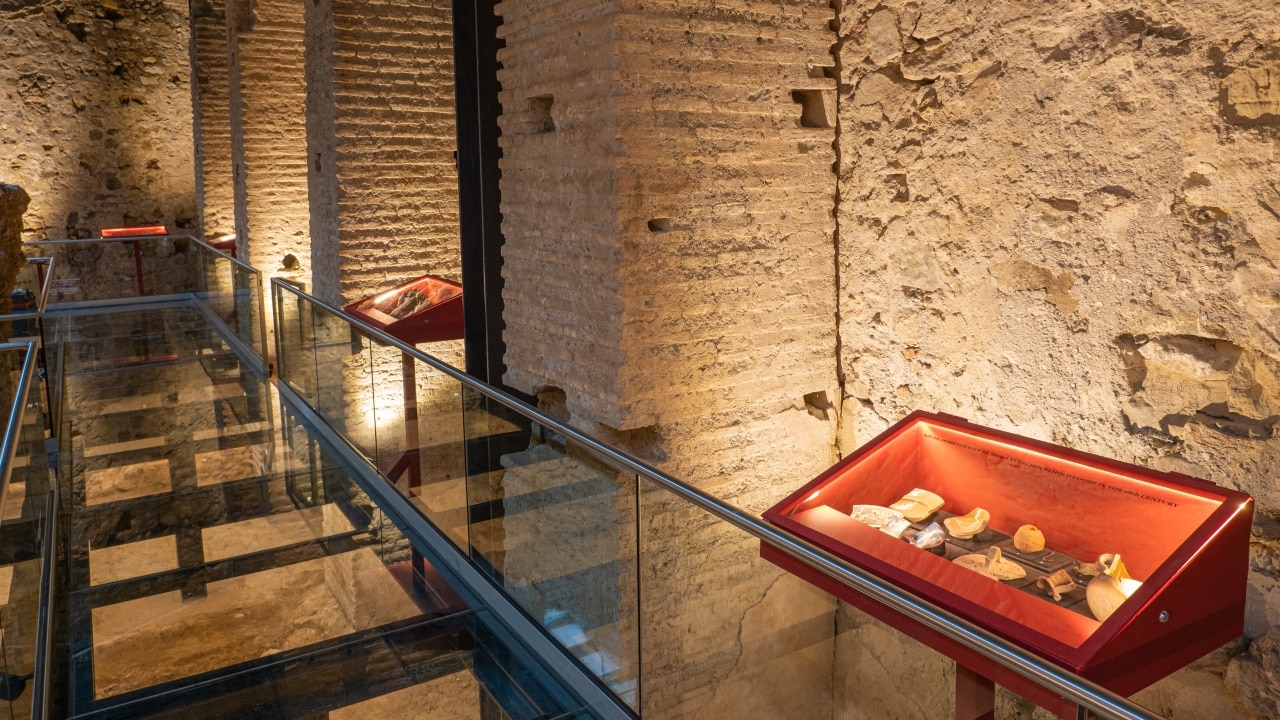
The objective of the intervention for which the Consistory opted at the time has been to recover this enclave that has remained hidden, and turn it into an exhibition space where you can learn about an important part of the history of Estepona. In addition to touring the facility, visitors can see first hand some of the archaeological pieces from different periods that have been obtained in the excavations carried out during the works. Thus, artillery ammunition, religious objects, ceramics or an old shelter from the Spanish Civil War can be found.
The number of visits registered during this first year of opening is significant of the interest in this historical heritage asset, especially considering its recent enhancement and its integration in cultural routes of the municipality.
The profile of visitors includes national and international tourists, as well as local residents interested in historical heritage. In addition, the center develops an important educational work for young people, and this year has received groups of students from schools in the city.
The councilman attached to the area of Historical Heritage, Daniel Garcia, stressed that these figures of visits show “the growing interest in the historical resources of Estepona that has been recorded in the city, and a consolidation of the castle as part of the cultural and tourist identity of the municipality”. It also stresses its “potential to expand interpretive activities, cultural events and educational outreach”.
The project of recovery and enhancement of the Castle of San Luis was developed in phases, being necessary firstly the acquisition by the City Council, of the houses that were attached and that kept the remains hidden. Subsequently, and after the conditioning of the entire environment, a thorough work with archaeological technique was started for the cleaning, conservation, stabilization and consolidation of the existing remains, as well as the elimination of the vegetal elements attached to the structure.
The enclosure has a walkway that allows visitors to tour the interior of the castle and contemplate the remains of the different historical phases of the building that have been appearing during the earthworks and archaeological excavations carried out. There are also panels and didactic audiovisual elements to help in the interpretation of the environment.
Historical value
This action in the Castle of San Luis has an enormous value, since it makes known a period of several centuries of the history of Estepona through the visit to the monument, offering society a space full of history that contains floors of the sixteenth century, walls of the eighteenth century, and even older pieces.
The Castle of San Luis de Estepona is a coastal fortress built in the last quarter of the 16th century, as part of the reorganization of the defense of the western coast of Málaga after the Moorish rebellion of 1568. Its original purpose was to reinforce the southern front of the walls of Islamic origin, dominating the natural anchorage of the beach of La Rada. Its most outstanding elements were three artillery bastions and a large porticoed parade ground with several barracks.
In the middle of the 18th century, part of the Castle of San Luis underwent an important transformation and was restructured as a cannon battery. After the damage caused by the earthquake of Lisbon in 1755 and the blowing up caused by the French in 1812, much of the castle was abandoned and fell into ruin, surviving only the cannon battery, which was incorporated as a courtyard in a house built in the late nineteenth century.
New Apartments

New Houses


Featured Properties



More news
The City Council completes the first phase of lighting installation in the coastal corridor and outskirt roads
This action has included the installation of LED-type luminaires and solar streetlights on 11 access roads to housing developments and in 15 areas of the…Seven companies bid for the execution of the new Asphalting Plan that prioritizes streets and roads in the suburbs
The City Council continues to promote the improvement of the road network with this program, which this time will reach about twenty roads throughout the…The City Council raises the budget for conservation and maintenance of the city to 35 million euros
The municipal accounts for 2026 allocate 26.25% of the expenditure item to the maintenance, cleaning and upkeep of infrastructures, parks, gardens, beaches and public buildings…